Hair thinning isn’t just a male issue. Millions of women experience noticeable hair loss at some point in their lives. At Kalos Hair Transplant in Atlanta, many female patients seek answers when their hair begins to change, often without realizing that hormones are a major factor.
Understanding how hormonal shifts at any age can affect hair loss is the first step toward finding the right solution.
How Hormones Affect Hair Growth
Hair growth follows a natural cycle, but hormones play a key role in regulating that cycle. When hormone levels fluctuate, it can disrupt normal growth and lead to shedding or thinning.
Common hormonal triggers include:
- Pregnancy and postpartum changes: Estrogen levels rise during pregnancy, often leading to fuller hair, then drop after delivery, causing temporary shedding
- Perimenopause and menopause: Declining estrogen and progesterone can lead to thinner, slower-growing hair
- PCOS (Polycystic Ovary Syndrome): Elevated androgens can shrink hair follicles and contribute to hair thinning
- Thyroid imbalances: Both hyperthyroidism and hypothyroidism can impact hair growth cycles
According to the American Academy of Dermatology, about 40% of women experience visible hair loss by age 40. Hormonal changes are one of the leading causes.
What Female Hair Loss Looks Like
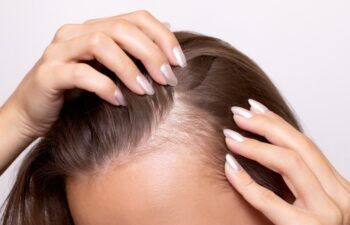
Unlike male pattern baldness, women typically experience more diffuse thinning rather than complete bald spots. You may notice:
- A widening part
- Reduced volume in your ponytail
- Thinning at the crown
- Increased shedding during brushing or washing
These changes can happen gradually or suddenly, depending on the underlying cause.
Non-Surgical Treatments That Support Hair Growth
The good news is that modern hair restoration offers several non-surgical options to help stimulate growth and improve density. At Kalos Hair Transplant, common treatments include:
- PRP (Platelet-Rich Plasma) Therapy: Uses your body’s own growth factors to stimulate dormant follicles and improve hair thickness.
- Stem Cell-Based Treatments: Support regeneration at the follicular level, helping improve overall hair health.
- Low-Level Laser Therapy (LLLT): Uses light energy to increase blood flow to the scalp and encourage hair growth.
- Microneedling: Creates micro-injuries in the scalp to stimulate collagen production and enhance absorption of growth serums.
These options are especially effective in early to moderate stages of thinning and can be used together for enhanced results.
When to Consider Hair Transplantation
For women experiencing more advanced thinning or areas where hair no longer grows, a hair transplant can provide a long-term solution.
The NeoGraft FUE Hair Transplant System offers a minimally invasive way to restore hair using your own follicles. Benefits include:
- No linear scarring
- Natural-looking hairline and density
- Permanent results using your own hair
- Shorter recovery time compared to traditional methods
NeoGraft uses automated follicular unit extraction, allowing for precise placement and high graft survival rates, often exceeding 90% with proper care.
A Personalized Approach for Women
Female hair loss is complex, and there’s no one-size-fits-all solution. Treatment depends on the cause, the pattern of thinning, and your long-term goals.
At Kalos Hair Transplant, each patient receives a customized plan that may combine multiple therapies for the best outcome. Addressing the hormonal component alongside physical restoration often leads to more successful, lasting results.
Take the First Step Toward Fuller Hair
If you’ve noticed thinning hair or changes in volume, you don’t have to accept it as permanent. With today’s advanced treatments, it’s possible to restore thicker, healthier-looking hair at any age.
Schedule a consultation with Kalos Hair Transplant to explore your options and create a plan tailored to your specific needs.
Medically reviewed by Benjamin C. Stong, MD on
Posted on behalf of
371 East Paces Ferry Rd, Suite 850
Atlanta, GA 30305
Phone: (404) 963-0871
Email: [email protected]
Opening Hours
Monday – Thursday: 9:00 AM – 5:00 PM
Friday: 9:00 AM – 4:00 PM